Unilateral Leg Training: Why Split Squats and Single-Leg RDLs Fix Strength Asymmetries
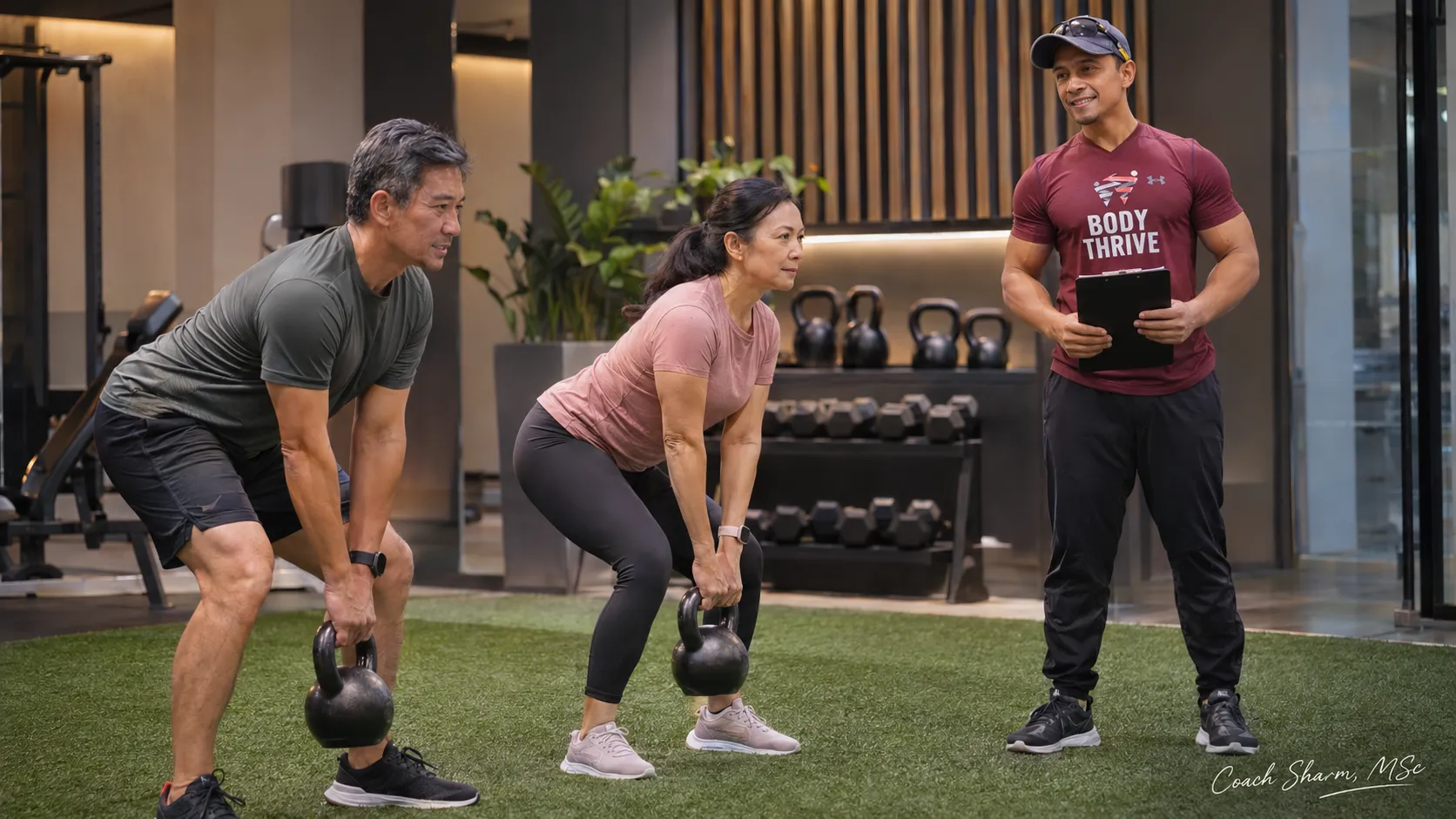
Single-leg exercises are essential for fixing bilateral strength gaps and stabilizing pelvic alignment because bilateral lifts allow your dominant limb to compensate for the weaker side unnoticed. Unilateral training isolates each limb independently, eliminating neuromuscular compensation and exposing bilateral deficit. Furthermore, unilateral movements actively recruit the gluteus medius, adductors, and deep pelvic stabilizers to counteract rotational forces and prevent lateral pelvic tilt. This structural reinforcement restores symmetrical torque output across the hip joint, optimizes gait mechanics, and significantly decreases lower back and knee injury risk during heavy compound lifts and daily activities.
Key Takeaways:
- ✔Unilateral leg training eliminates hidden bilateral compensation where the dominant leg masks deficits.
- ✔Split squats and single-leg RDLs recruit pelvic stabilizers like the gluteus medius to eliminate pelvic tilt and hip shift.
- ✔Cross-education neuromuscular adaptations preserve strength and promote symmetry even during localized rehabilitation.
- ✔Progressive overload through structured small group personal training ensures safe mechanics and measurable hypertrophy.
The Biomechanics of Bilateral Deficit and Asymmetry
When you perform standard bilateral squats or conventional deadlifts, your central nervous system naturally finds the path of least resistance. If your right quad or hip extensor produces 15 percent more force than your left, your pelvis shifts subtly toward the stronger side. Over months of training in high-pressure corporate environments like Raffles Place or Marina Bay, long hours seated at a desk tighten your hip flexors and amplify these neuromuscular imbalances. Bilateral lifts simply camouflage the issue until chronic patellar tendinitis or sacroiliac joint discomfort surfaces.
This discrepancy brings us to the core unilateral leg training benefits. The bilateral deficit describes the physiological phenomenon where the force produced by both limbs together is less than the sum of forces produced by each limb independently. Single-leg training exploits this neurological reality. By loading one limb at a time through split squats and single-leg Romanian deadlifts (RDLs), you force the nervous system to recruit motor units at maximal thresholds without letting a dominant limb take over.
Pelvic Alignment and Frontal Plane Stability
Bilateral barbell exercises operate almost exclusively in the sagittal plane: flexing and extending the hips, knees, and ankles. Real human movement, from navigating crowded Bugis Junction footpaths to playing weekend sports along East Coast Park, requires multi-planar control. Single-leg exercises challenge the frontal and transverse planes under load.
During a Bulgarian split squat or single-leg RDL, your center of mass sits medial to your base of support. Gravity constantly threatens to drop the unsupported side of your pelvis. To stay upright, the gluteus medius and minimus, quadratus lumborum, and contralateral obliques must fire continuously. This coordinated isometric contraction prevents the Trendelenburg sign (pelvic drop) and anchors your pelvis in neutral alignment. Over time, you build robust resilience against the lower back tightness commonly experienced after long MRT commutes from Tanjong Pagar or Kallang.
"In my 25 years of coaching clients across Singapore, I have seen hundreds of heavy squatters who could not balance on one foot without violent pelvic twisting. True functional strength is not merely moving a barbell up and down; it is the capacity to produce force while stabilizing your joints against chaotic rotational torque. Fix the unilateral weak link first, and your bilateral power will follow naturally."
Comparing Unilateral Exercises vs. Bilateral Movements
Understanding where unilateral exercises fit into your weekly fitness program requires comparing mechanical demands and targeted muscle actions directly. Here is how key lower-body movements compare across stabilization requirements and neuromuscular recruitment:
| Exercise Pattern | Primary Stabilizers Recruited | Pelvic Control Demand | Asymmetry Correction Index |
|---|---|---|---|
| Rear-Foot Elevated Split Squat (Bulgarian) | Gluteus Medius, Adductor Magnus, Vastus Medialis (VMO) | High (Resists lateral pelvic shift and knee valgus) | Very High (Full limb isolation) |
| Single-Leg Romanian Deadlift (RDL) | Glute Medius, Deep Hip Rotators, Foot Intrinsic Musculature | Very High (Resists rotational pelvic flare) | Exceptional (Highlights hamstring and hip hinge imbalances) |
| Walking Lunges | Gluteus Maximus, Core Bracing Complex, Calves | Moderate to High (Dynamic deceleration control) | High (Direct stride-by-stride comparison) |
| Barbell Back Squat (Bilateral) | Erector Spinae, Rectus Abdominis | Low to Moderate (Allows dominant side compensation) | Low (Masks existing strength discrepancies) |
Addressing the "Cross-Education" Neurological Advantage
One of the most remarkable benefits of unilateral training is the neurological phenomenon known as cross-education. Peer-reviewed sports science research demonstrates that when you perform unilateral training on one limb, the contralateral, untrained limb experiences measurable strength adaptations of up to 10 to 12 percent. This cross-transfer occurs through increased neural drive, cortical motor plasticity, and reciprocal inhibition within the spinal cord.
For clients managing unilateral knee pain or ankle sprains, this means you do not have to halt progress entirely. By diligently loading your healthy leg, you actively protect the injured leg from severe muscle atrophy and maintain symmetrical motor control. You can evaluate your baseline energy demands and structural progress using our specialized fitness calculators to track ongoing physiological adaptations.
How to Program Split Squats and Single-Leg RDLs
To maximize unilateral leg training benefits without causing excessive central nervous system fatigue, follow a structured progression model:
- Exercise 1: Rear-Foot Elevated Split Squat — 3 to 4 sets of 8 to 10 repetitions per leg. Elevate your back foot on a bench no higher than your tibial plateau. Keep your front foot grounded through a strong three-point tripod foot pressure: heel, big toe base, and pinky toe base. Descend under a strict 3-second eccentric tempo.
- Exercise 2: Landmine or Dumbbell Single-Leg RDL — 3 sets of 8 to 12 repetitions per leg. Keep the non-working leg extended straight back with toes pointing directly toward the floor to prevent your pelvis from flaring open. Hinge deeply at the hips while maintaining a neutral spine.
- Supportive Nutrition Protocol — Recovery requires quality fuel. Whether ordering post-workout mixed vegetable rice (Cai Fan) with two portions of steamed chicken breast and tofu or picking up steamed chicken rice with double meat around Beach Road, aim for 1.8 to 2.2 grams of protein per kilogram of body weight daily.
Mastering balance and preventing injury risk demands technical precision. If your form breaks down, you risk substituting lower back hyperextension for pure hip drive. In our structured small group personal training pods at 100 Jalan Sultan #03-10, we cap sessions at six members to ensure every repetition receives close, professional coaching eyes while maintaining high-energy squad motivation.
Frequently Asked Questions
Are unilateral leg exercises better than bilateral exercises?
Unilateral exercises are not inherently superior to bilateral exercises, but they serve an irreplaceable role in athletic development. Bilateral lifts allow for higher absolute mechanical loads to build raw total-body capacity, whereas unilateral leg exercises eliminate bilateral compensation, correct muscle imbalances, recruit crucial pelvic stabilizers, and reduce spinal compression. An optimal training split integrates both modalities.
What happens if you only train one leg?
If you train only one leg, the exercised limb will experience muscle hypertrophy and strength gains, while the untrained limb will gain a modest 10 to 12 percent strength increase due to neural cross-education. Over time, significant structural and muscle imbalances will develop, increasing joint torque discrepancies, gait irregularities, and injury risk in the pelvis and lower spine.
What are the benefits of doing single-leg exercises?
The core benefits of doing single-leg exercises include correcting bilateral strength discrepancies, strengthening hip stabilizers like the gluteus medius, improving ankle and foot proprioception, reducing lumbar axial load, and improving movement transfer to sprinting, jumping, and everyday balance.
Ready to Transform Your Strength & Energy?
Experience personalized coaching at our private Bugis / Beach Road studio, or bespoke Marine Parade private sessions. Book your 1-on-1 trial session today. Private studio near Bugis, Beach Road & Lavender MRT (serving Tanjong Rhu & Kallang). Small squads strictly capped at 6.