The Scale – To Use or Not To Use
Key Takeaway: In this guide, Coach Sharm explores evidence-based principles of Use or Not for sustainable health and fitness results in Singapore.
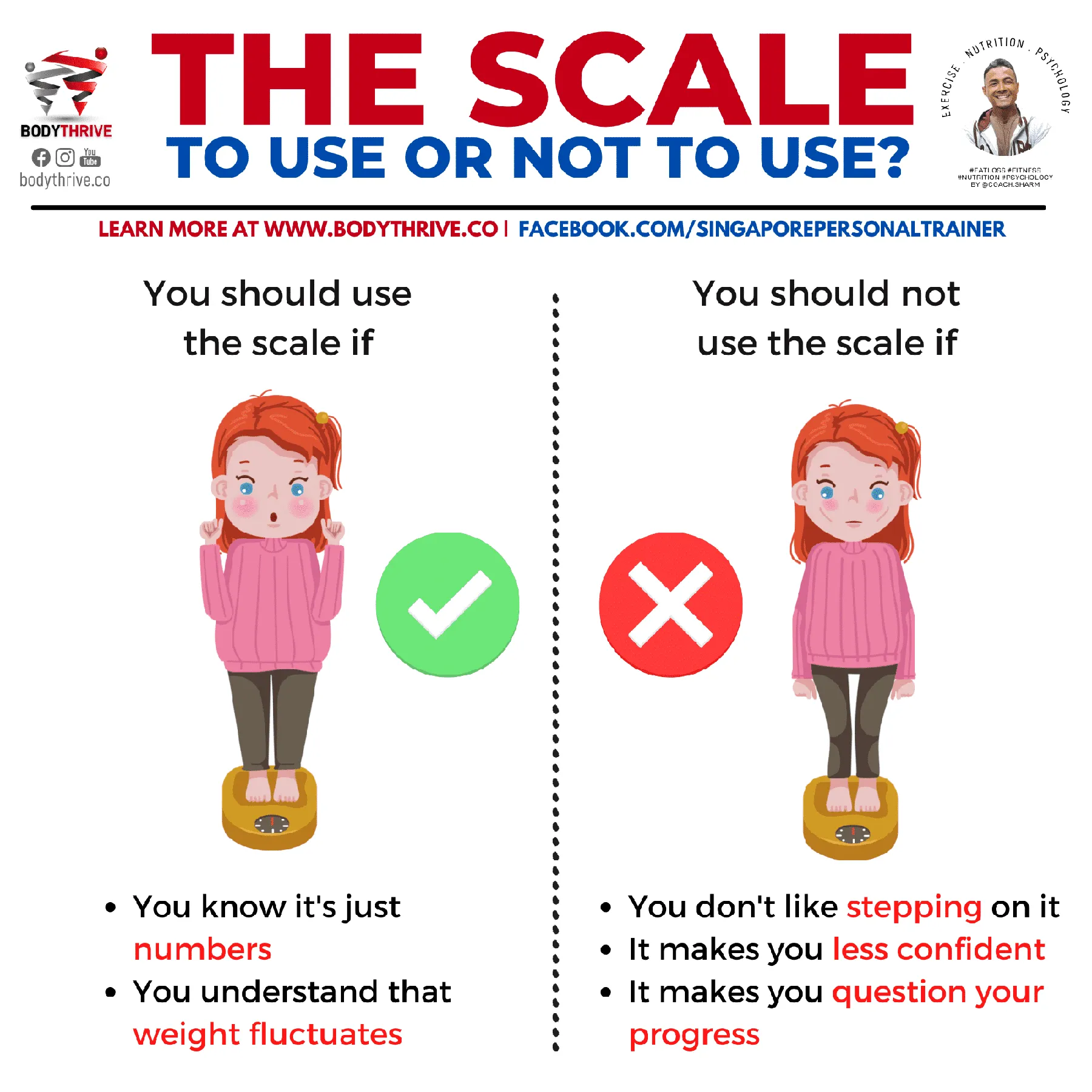
👋 Hello friends, most of us are familiar with the weighing scale. While it’s the most common tool for measuring and tracking our weight, there are also instances when we need to re-think about what’s best for us, not just physically but also psychologically.
In Singapore, mastering Use or Not centers on personalized movement assessment, real-time biomechanical feedback, and structured progressive overload calibrated to individual joint anatomy. Rather than relying on generic online templates or unsupervised workouts that risk injury, sustainable progress requires objective progression tracking and movement fidelity. At BodyThrive, Coach Sharm (MSc Exercise & Sports Science) guides clients through private studio coaching at Sultan Plaza #03-10 near Bugis and outdoor sessions at Marine Cove East Coast Park. This evidence-based approach ensures rapid body recomposition, protected joints, and long-term vitality for busy working professionals.
Now, why am I saying this?
*Studies have shown that with regard to affect, self-esteem and body evaluation, and eating-related behaviours and cognitions, in total, most studies provided evidence of a harmful impact of self-weighing on these outcomes; while fewer studies found a positive impact.
I’ve also had meaningful discussions with my clients where some of them were not even aware why weighing the scale is doing more harm than good for them.
They feel very anxious before weighing themselves and some feel disappointed with themselves after weighing in – leading to low motivation and sometimes, self-loathing.
Weighing yourself isn’t always a reliable method for monitoring your health, as weight fluctuates day-to-day. Based on this, stepping on the scale too often can have negative side effects. In fact, weighing ourselves frequently can also create mental obstacles and even lead to overeating.
Here are more reasons to not rely on the weighing scale:
1) It diverts our attention away from real body cues.
The body has a limited amount of energy, and when we’re hungry, our body is trying to tell us that it needs to eat more food. We tend to ignore body cues because we’re focused on the number on the scale. If we’re trying to lose weight, it’s a good idea to pay attention to our body cues, and not rely on the scale. When we next step on the scale, we should think of it as a measurement of our progress vs. a measurement of how well we’re doing.
2) It can become an obsession and can affect us mentally.
If we weigh ourselves regularly, it is easy to see that we are on the right path and that we should continue with our diet. But our brains interpret the regular checking of our weight as a success signal and an incentive to continue working on our figure. The more we weigh ourselves, the more we are in for disappointment. Our weight will never be 100%, and we will always be somewhat dissatisfied. In fact, if we weigh ourselves too much and too often, this can cause us to become obsessive over it. In the end, we will only be disappointed and discouraged, because we are bound to have a bad day.
3) It doesn’t indicate accurate body composition.
I believe this is a very common misconception about weighing scales. To be more accurate, the weighing scale does not indicate body fat percentage but its weight. The reason is that the human body is not 100% water, so it will be challenging to weigh it accurately. In addition, it is impossible to create a weighing scale that can weigh the body fat percentage, because it will be affected by a person’s body temperature and other factors. We need to take body composition seriously because muscles take up less space than fat on our bodies. And if we only focus on the numbers in the weighing scale, we tend to ignore the muscle mass which plays a huge role in healthy fat loss, making us look much leaner.
4) The numbers on the scale do not necessarily prove overall good or bad health
How much a person weighs does not necessarily equal his or her overall health. Focusing on the numbers actually diverts our attention from getting a healthy diet with enough nutrients, drinking enough water, having ample amount of sleep, having regular physical activities – because we’re too focused on getting the numbers right rather than improving our overall lifestyle.
Of course, this is not to say that you should never step on the scale ever again. Some people have managed to successfully lose weight by weighing themselves every day. And this is great. They understand that their weight fluctuates and they know how to make use of the numbers they see such that they won’t feel disappointed with them.
For some of us who has the knowledge but still feel anxious about self-weighing, it’s okay. It’s not our fault. Each person’s struggle is different and there is no need to compare one’s situation to another. There is no need to compare your numbers with others.
We need to focus on ourselves. What matters most is that we’re making progress, we’re trying our best, and the weighing scale isn’t necessarily a must during this process.
This really depends on you. That the point of this post is to remind you, and I’m reminding myself as well, that the weighing scale may give us the numbers with regards to our weight, but it’s doesn’t measure our worth at all.
I hope we continue to love ourselves with or without weighing scales, whichever we feel the most comfortable with.
And if you’d like to know more about how I encourage my clients to check their progress without 100% relying on the scale, do DM/text me for more info, ya. I’d be happy to help. 🙂
Have a great day everyone! 🙂
*Pacanowski, C R et al. “Self-Weighing: Helpful or Harmful for Psychological Well-Being? A Review of the Literature.” Current obesity reports vol. 4,1 (2015): 65-72. doi:10.1007/s13679-015-0142-2
Reclaim Your Energy, Strength & Confidence
“Whether you choose private 1-on-1 studio training at Sultan Plaza #03-10 or a tight 4-person small group squad, the differentiator is clinical coaching fidelity. When an experienced coach assesses your movement in real time, you achieve in 12 weeks what unsupervised gym members struggle to see in three years.”
— Coach Sharm (Hisham Musa, MSc Exercise & Sports Science — 25+ Years Coaching in Singapore) Clinical Reference: National Strength and Conditioning Association (NSCA): Direct Supervision & Training Adherence
| Coaching Modality | Coach-to-Client Ratio | Investment Level (SGD) | Ideal Client Profile & Clinical Outcome |
|---|---|---|---|
| Private 1-on-1 Studio PT | 1:1 Direct Supervision | $98 - $158 / session | Complex joint rehabilitation, rapid executive body transformation |
| Small Group Personal Training (SGT) | 1:4 Capped Squad | $28 trial / $50-$65 regular | High-energy accountability, progressive strength, budget-friendly |
| Commercial Gym Membership | Unsupervised Access | $120 - $180 / month | Self-motivated lifters with validated movement mastery |
| Marine Cove Outdoor Fitness Squad | Semi-Private Cohort | $7 introductory trial | Fresh-air weekend conditioning, functional cardio & core |
Whether you want private 1-on-1 coaching at Sultan Plaza #03-10, community group trials, or free science-backed tools — start your transformation today.
1 · Calculate & Diagnose
Estimate Your Daily Calorie Deficit
Use our evidence-based calculator to find your exact caloric intake for sustainable fat loss.
Frequently Asked Questions
How does The Scale – To Use or Not To Use apply to busy professionals living in Singapore?
Balancing Use or Not with executive work demands requires time-efficient, structured sessions. At BodyThrive's private studio at Sultan Plaza #03-10 (near Bugis & Nicoll Highway MRT), Coach Sharm (MSc) programs focused 45-to-60 minute workouts that deliver maximum progressive overload stimulus with zero waiting for equipment, allowing working professionals to stay consistent without burnout.
How quickly can I expect measurable results from Use or Not?
Most clients experience noticeable improvements in movement posture, joint comfort, and neuromuscular energy within the first 3 to 4 weeks. Clinically measurable body recomposition—including visceral fat reduction and functional muscle development—typically occurs within 8 to 12 weeks when paired with our tailored Singapore hawker nutrition strategies.
What makes Coach Sharm's MSc coaching methodology different from commercial gyms?
Coach Sharm holds a Master of Science in Exercise & Sports Science and brings over 25 years of coaching experience in Singapore. Every client receives an initial musculoskeletal screen, pain-free joint-friendly exercise regressions, and direct 1-on-1 supervision at Sultan Plaza #03-10 or small group sessions at Marine Cove, ensuring safe, science-backed progression instead of generic fitness routines.
2 · Blueprint & Roadmap
VIP Body Transformation Roadmap
Our complete 12-week roadmap covering nutrition principles, progressive lifting, and habit sustainability.
3 · Train With Coach Sharm
Private 1-on-1 Personal Training
Private studio coaching at Sultan Plaza #03-10 with Coach Sharm. First session: $98–$158; Starter 5-Pack: $158 × 5 ($790).