Sarcopenia Prevention Singapore: Executive Strength 45+

Singapore professionals should begin structured progressive resistance training by age 40 to 45 at the latest to counteract age-related sarcopenia and metabolic slowdown. Involuntary skeletal muscle loss typically accelerates after age 40 at a rate of roughly 1 percent annually, compounded by sedentary corporate schedules in Tanjong Pagar and Marina Bay. Initiating joint-safe strength training early stimulates mechanical tension, preserves bone density, protects insulin sensitivity, and establishes a robust neuromuscular foundation before rapid hormonal and metabolic changes set in during your fifties.
Key Takeaways:
- ✔Sarcopenia accelerates after age 40, depleting up to 8 to 10 percent of skeletal muscle mass per decade without resistance training.
- ✔Executive lifestyle stressors, long sedentary hours in the CBD, and high-glycemic hawker fare accelerate muscle wasting and visceral fat accumulation.
- ✔Two to three targeted 45-minute sessions per week using compound progressive overload suffice to arrest muscle atrophy and stimulate bone density.
- ✔Pairing adequate daily protein (1.2 to 1.6 grams per kilogram) with progressive overload optimizes physical resilience and longevity.
The Silent Executive Crisis: Age-Related Muscle Loss in Singapore
For corporate leaders, directors, and business owners navigating demanding schedules across Singapore, fatigue is frequently misdiagnosed as routine burnout. You sit through eight to ten hours of back-to-back boardroom presentations in Marina Bay or Tanjong Pagar, fuel up on quick hawker lunches, and observe that your posture is slumping, your lower back aches, and your waistline is expanding despite eating similar portions. What you are actually experiencing is the quiet, physiological onset of age-related muscle loss, clinically known as sarcopenia.
Sarcopenia refers to the involuntary loss of skeletal muscle mass, strength, and physical function. While clinically recognized as a serious geriatric condition, the trajectory begins decades earlier. After age 40, healthy adults who do not engage in targeted resistance training lose between 3 to 8 percent of their muscle mass every ten years. By age 50, this rate of atrophy often accelerates. When muscle mass drops, resting metabolic rate declines simultaneously, paving the way for insulin resistance, visceral fat storage, and chronic joint instability.
Proactive intervention through structured strength training is not an aesthetic vanity project; it is the cornerstone of metabolic resilience and cognitive vitality. To build an enduring physical foundation into your second half of life, explore our comprehensive guide to fitness after 50.
Why CBD Professionals in Singapore Lose Muscle Faster
Urban professionals in Singapore face a unique combination of environmental and physiological stressors that amplify musculoskeletal deterioration:
- Prolonged Desk-Bound Immobility: Prolonged sitting in air-conditioned offices keeps gluteal muscles inactive, weakens spinal erectors, and causes chronic hip flexor tightness. This lack of daily mechanical loading accelerates muscle disuse atrophy.
- Hawker Nutrition Imbalances: A standard hawker lunch of Char Kway Teow, Mee Pok, or regular Chicken Rice provides excess refined carbohydrates and seed oils with inadequate high-quality protein. Muscle protein synthesis requires a consistent supply of essential amino acids, which typical office meals rarely supply.
- High Chronic Cortisol: Elevated work stress and chronic sleep deprivation keep systemic cortisol high. Sustained cortisol levels promote muscle catabolism (breakdown) while encouraging the storage of deep visceral adipose tissue around abdominal organs.
- Cardio-Dominant Exercise Habits: Many executives attempt to manage weight by jogging around Marina Bay or cycling along the East Coast Park. While cardiovascular activity supports heart health, excessive endurance work without mechanical resistance fails to stimulate muscle protein synthesis and does not halt sarcopenia.
"Sarcopenia is not an unavoidable consequence of aging; it is largely the natural consequence of muscle disuse and inadequate mechanical loading. When you subject your structural joints and major muscle groups to precise, progressive resistance in a safe setting, your nervous system responds immediately, regardless of whether you are 45 or 65."
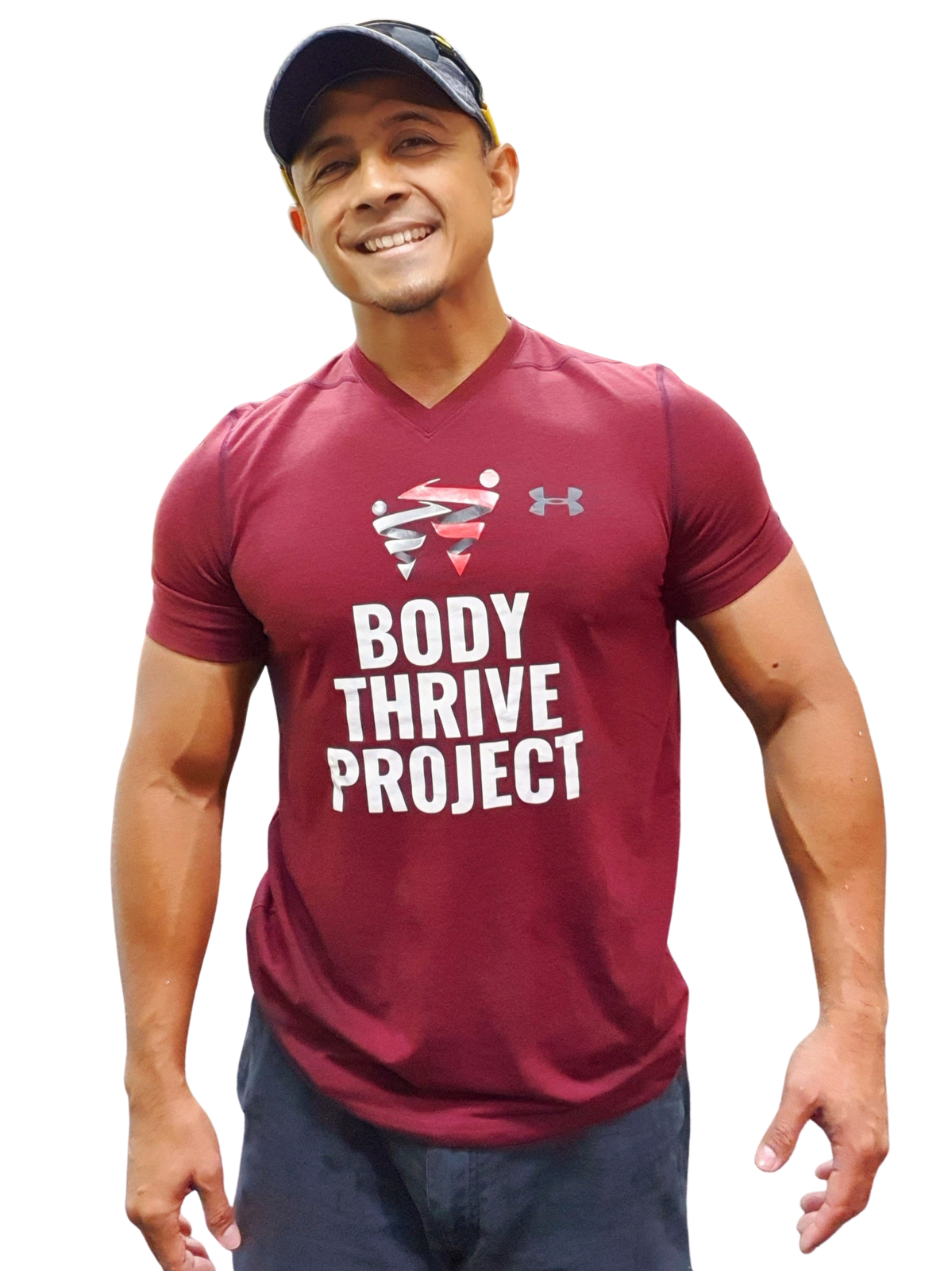
- Coach Sharm (Hisham Musa, MSc Exercise & Sports Science), Founder of BodyThrive Singapore
The Twin Pillars of Sarcopenia Prevention: Progressive Overload and Protein
Reversing muscle loss requires two non-negotiable inputs: mechanical stimulus and nutritional substrate. Your body requires a biological reason to preserve energy-dense lean muscle tissue.
1. Progressive Resistance Overload
Progressive overload means systematically increasing the demands placed upon your musculoskeletal system over time. This does not mean lifting dangerously heavy weights on day one. Instead, it involves mastering multi-joint compound movement patterns, such as the goblet squat, Romanian deadlift, horizontal push, and vertical pull. By incrementally progressing load, volume, or time under tension, your body adapts by increasing motor unit recruitment and repairing muscle fibers with greater cross-sectional area.
2. Nutritional Substrate and Hawker Hacks
Adults over 45 experience anabolic resistance, meaning older muscle tissue requires a higher concentration of amino acids (specifically leucine) to trigger muscle protein synthesis. Sedentary recommendations of 0.8 grams of protein per kilogram of body weight are insufficient to prevent sarcopenia. Active adults should aim for 1.2 to 1.6 grams of protein per kilogram daily.
When eating around office hubs or food centres, make deliberate substitutions:
- Economic Rice (Cai Fan): Request two servings of lean protein (such as steamed chicken breast, stir-fried lean pork slices, or steamed tofu with minced meat) paired with two vegetable dishes, and ask for half rice (shao fan).
- Roasted Chicken Rice: Ask for double chicken breast (ji xiong), decline the skin, and request plain white rice instead of oily seasoned rice.
- Fish Soup: Opt for sliced fish soup (double sliced fish, not fried) with extra tofu and bitter gourd, taking bee hoon or brown rice on the side.
Key Diagnostic Markers: Muscle Mass, Grip Strength, and Bone Density
Evaluating your functional age requires measuring physiological biomarkers rather than simply tracking the number on your bathroom scale.
| Biomarker | Functional Role in Longevity | Clinical Benchmark (Adults 45+) | Targeted Training Intervention |
|---|---|---|---|
| Grip Strength | Direct proxy for whole-body neurological recruitment and biological vitality. | Men: > 35 kg Women: > 22 kg | Dead hangs, unilateral farmer carries, heavy rows, and barbell holds. |
| Skeletal Muscle Mass | Primary glucose disposal sink and metabolic reserve against disease. | SMI > 7.0 kg/m² (Men) SMI > 5.7 kg/m² (Women) | Multi-joint progressive resistance training 2 to 3 times weekly. |
| Unilateral Leg Strength | Predicts fall risk, knee stability, and independent mobility into senior years. | 30-second sit-to-stand (> 15 reps) or single-leg box squat control | Split squats, reverse lunges, step-ups, and Romanian deadlifts. |
| Bone Density (BMD) | Prevents osteopenia, structural fractures, and spinal compression. | T-Score > -1.0 (Normal) | Axial skeletal loading, closed-chain compound movements. |
You can objectively monitor your metabolic rate, lean body tissue, and calorie requirements using our curated suite of scientific assessments on our health and longevity calculators.
The Executive Metabolic Reset Protocol
Busy corporate executives rarely have ninety minutes to spend in a crowded commercial gymnasium. The Executive Metabolic Reset protocol delivers high neuromuscular stimulation within a time-efficient 45-minute window. By focusing on joint-safe compound exercises, we maximize hormonal and metabolic output without placing undue shear stress on aging spines, knees, or shoulders.
Our private personal training studio is located at 100 Jalan Sultan (#03-10 Sultan Plaza, Singapore 199001), easily accessible from Bugis, Beach Road, and Arab Street MRT interchanges. This calm, private environment is designed specifically for focused, distraction-free strength work. For executives based along the East Coast corridor, we also deliver tailored condo and private cluster coaching across Marine Parade, Tanjong Rhu, and Kallang.
If you are ready to regain functional physical capability, explore our bespoke executive longevity and sarcopenia prevention coaching, led directly by Coach Sharm (MSc Exercise & Sport Science, NTU).
Frequently Asked Questions
At what age does sarcopenia muscle loss start in Singapore adults?
Skeletal muscle loss typically begins in a person's early thirties at a subtle rate, but it accelerates noticeably around age 40 to 45. Without regular resistance training, adults lose approximately 3 to 8 percent of muscle mass per decade after 40, leading to a slower resting metabolic rate, reduced joint stability, and increased insulin resistance.
How many days a week of progressive resistance training prevents sarcopenia after 45?
Two to three focused, 45-minute sessions per week are sufficient to prevent sarcopenia and build functional lean mass. These sessions should prioritize compound multi-joint movements like squats, hinges, pushes, and pulls performed with progressive overload and joint-friendly biomechanics.
How much daily protein do adults over 45 need alongside strength training to preserve lean muscle?
Adults over 45 should consume between 1.2 to 1.6 grams of protein per kilogram of body weight each day. Due to age-related anabolic resistance, muscle tissue requires a higher concentration of amino acids per meal to stimulate muscle protein synthesis effectively.
Ready to Transform Your Strength & Energy?
Experience personalized coaching at our private Bugis / Beach Road studio, or bespoke Marine Parade private sessions. Book your 1-on-1 trial session today. Private studio near Bugis, Beach Road & Guoco Midtown (serving Tanjong Rhu & CBD executives), plus Marine Parade hotel & condo executive training.