Kettlebell Swing Mechanics: Mastering the Hip Hinge for Posterior Chain Power

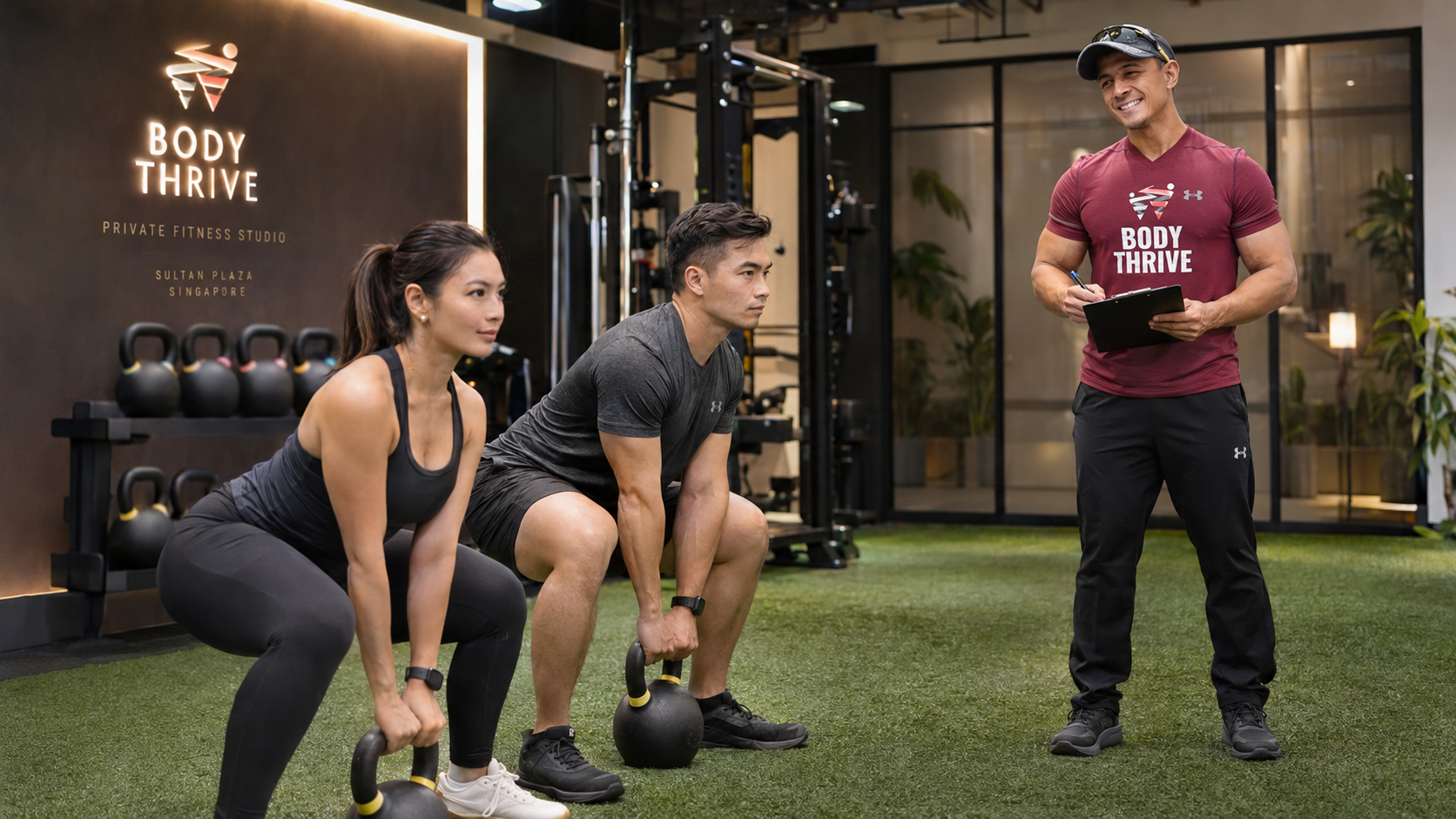
Specialized kettlebell coaching builds explosive hamstring and glute power safely by training the pure hip hinge movement pattern rather than a knee-dominant squat. Under qualified biomechanical supervision, lifters learn rapid eccentric deceleration and explosive concentric hip extension. This cyclical ballistic loading triggers rapid motor unit recruitment across the posterior chain while maintaining a neutral spine. By teaching intra-abdominal bracing, active lat engagement, and precise timing, specialized coaching eliminates lumbar shear stress, turning ballistic hip drive into functional strength, metabolic conditioning, and bulletproof joint resilience.
Key Takeaways:
- ✔The kettlebell swing is a horizontal hip hinge, not a vertical squat.
- ✔Ballistic loading trains the stretch-shortening cycle for explosive hamstring and glute recruitment.
- ✔Active lat connection and intra-abdominal bracing protect the lumbar spine against dangerous shear forces.
- ✔Small group personal training provides high-touch technical feedback to refine swing mechanics at scale.
Mastering the Hip Hinge: The Foundation of Posterior Chain Power
The kettlebell swing is widely regarded as one of the most potent athletic movements in physical training. Yet, it remains one of the most frequently butchered exercises across commercial gyms in Singapore. Many corporate professionals commuting between Tanjong Pagar offices and Marina Bay desk jobs attempt swings without understanding the fundamental biomechanics of the hip hinge. The result is almost always excessive lumbar flexion, wasted energy, and anterior knee pain.
To build genuine posterior chain power safely, you must work with a qualified kettlebell coach singapore who understands how to systematically deconstruct and rebuild your movement mechanics. When you transition from mindless ballistic reps to purposeful, coached movement patterns, the kettlebell swing becomes an unmatched tool for developing explosive hip extension, athletic durability, and lean muscle mass. For outdoor functional fitness and fresh-air conditioning, explore our outdoor workouts in Singapore.
Squat vs. Hip Hinge: Biomechanical Differences
The primary error in amateur kettlebell swings is treating the movement as a squat. A squat is a knee-dominant movement characterized by significant knee flexion, an upright torso, and vertical displacement of the center of mass. In contrast, the kettlebell swing is a pure hip hinge: a hip-dominant pattern where the hips translate horizontally backward with minimal knee bend and vertical shins.
Understanding this distinction is vital for anyone who spends long hours seated in corporate offices around Bugis or the CBD. Prolonged sitting causes reciprocal inhibition of the glutes, tight hip flexors, and poor pelvic control. If you squat a swing, you overload the quadriceps and patellar tendons while placing the lumbar spine under awkward shear stress. When you hinge correctly, you load the gluteus maximus, semitendinosus, and biceps femoris like a drawn bowstring before violently snapping into terminal hip extension.
| Biomechanical Variable | Hip Hinge (Kettlebell Swing) | Squat Pattern |
|---|---|---|
| Primary Joint Action | Maximum hip flexion and extension | Maximum knee flexion and extension |
| Shin Angle | Near vertical (minimal forward travel) | Forward angled over the toes |
| Primary Muscle Drivers | Gluteus maximus, hamstrings, adductors | Quadriceps femoris, gluteals |
| Vector of Force | Horizontal projection and deceleration | Vertical ascent and descent |
The Physics of Ballistic Loading and Spinal Protection
Why is the swing so effective for building athletic power? The answer lies in the stretch-shortening cycle (SSC) and dynamic loading. During the eccentric backswing, the kettlebell creates a long moment arm from the shoulder to the hip. As the bell drops, gravity and momentum multiply its effective load, forcing the hamstrings and glutes to decelerate the weight rapidly at the bottom of the hinge.
This rapid eccentric deceleration stimulates high-threshold motor units that conventional, slow-speed lifting often misses. However, this same force can cause injury if spinal stiffness is compromised. To protect the back, lifters must engage the latissimus dorsi to pull the bell tight to the groin, known biomechanically as 'packing the shoulders.' This co-activates the thoracolumbar fascia, reinforcing the spine against rotational and shear forces.
"The kettlebell swing is not an arm raise; it is an explosive pelvic projection followed by complete standing plank tension. If you feel the bell in your shoulders or your lower back, you have disconnected your kinetic chain and lost the hinge."
- Coach Sharm (Hisham Musa, MSc Exercise & Sports Science), Founder of BodyThrive Singapore
Integrating Kettlebells Into Structured Strength and Conditioning
At BodyThrive Singapore, kettlebell mechanics are systematically integrated into both comprehensive 1-on-1 personal training and semi-private squads. Our dedicated training studio at 100 Jalan Sultan #03-10 (conveniently serving Bugis, Beach Road, Arab Street, Kallang, and Tanjong Rhu) features structured progressions that build competency from dead-stop kettlebell deadlifts up to heavy two-arm and single-arm Russian swings.
For clients residing along the East Coast and Marine Parade, we provide tailored cluster coaching that applies these same principles. Whether you are balancing intense workweeks in the Central Business District or looking to optimize body composition after grabbing lunch like Cai Fan or Chicken Rice at a local hawker centre, systematic posterior chain conditioning burns massive calories while sparing your joints from excessive pounding.
Before ramping up volume, you should also calculate your daily energy balance and macronutrient needs using our specialized evidence-based tools at https://www.bodythrive.co/tools/. Dialing in your nutritional fuel ensures that the explosive power you build on the gym floor translates into lean functional muscle and sustained vitality.
The BodyThrive Small Group Approach (SGT)
Many fitness enthusiasts find themselves torn between costly private coaching and generic, overcrowded bootcamps. BodyThrive bridges this gap through Small Group Personal Training capped at strictly six participants. In our semi-private squads, every member receives personalized biomechanical adjustments, real-time trajectory corrections, and customized loading protocols.
This high-touch environment ensures you never perform ballistic swings with compromised form. By mastering the hip hinge, you safeguard your lower back, supercharge your athletic performance, and build a powerful, functional body that withstands the stresses of daily corporate and urban life in Singapore.
Frequently Asked Questions
Why does my lower back hurt after doing kettlebell swings?
Lower back pain during swings typically happens when lifters bend at the lumbar spine instead of hinging deeply at the hips. Allowing the kettlebell to drop below the knees or failing to engage the lats forces the lumbar erectors to handle ballistic shear loads that should be absorbed by the glutes and hamstrings.
How heavy should my kettlebell be for swing power development?
Beginners usually start with 12kg to 16kg for women and 16kg to 20kg for men to engrain the hip hinge pattern safely. Once form is solid, progressing to 24kg or 32kg maximizes explosive posterior chain recruitment without sacrificing movement speed.
Can kettlebell swings replace traditional deadlifts for glute and hamstring strength?
Kettlebell swings complement rather than completely replace heavy deadlifts. While barbell deadlifts build raw maximal strength under high static loads, kettlebell swings develop rate of force development (RFD), explosive power, and dynamic metabolic endurance.
Ready to Transform Your Strength & Energy?
Experience personalized coaching at our private Bugis / Beach Road studio, or bespoke Marine Parade private sessions. Book your 1-on-1 trial session today. Private studio near Bugis, Beach Road & Lavender MRT (serving Tanjong Rhu & Kallang). Small squads strictly capped at 6.